Saltar al contenido
Montaña Palentina: We offer you happiness.
Asociación 0002857 JCYL
Calle El Pozo 8,
34879 Villanueva de Arriba -Santibáñez de la Peña- (Palencia)
España
See - Montaña Palentina Turismo Vivo

See

Activities for all tastes in the Palencia Mountain

Enjoying every corner of the Palencia Mountain is easy. Among the natural resources, we can visit caves, admire large reservoirs, and explore forests of different types, including oak groves, beech forests, yew groves, and even encounter various unique animal species. A visit to the Palencia Mountain Natural Park is a must for every visitor, entering through any of its access points. For guidance and to go directly to the most interesting places, it is recommended to have Guides and companies authorized for this purpose.

The landscape and the people of the Palencia Mountain are two of the most important tourist resources, but they are not the only ones. Its mountains and even its air, declared as one of the purest in Europe, make visitors feel that coming to the Palencia Mountain is also a desire to return.
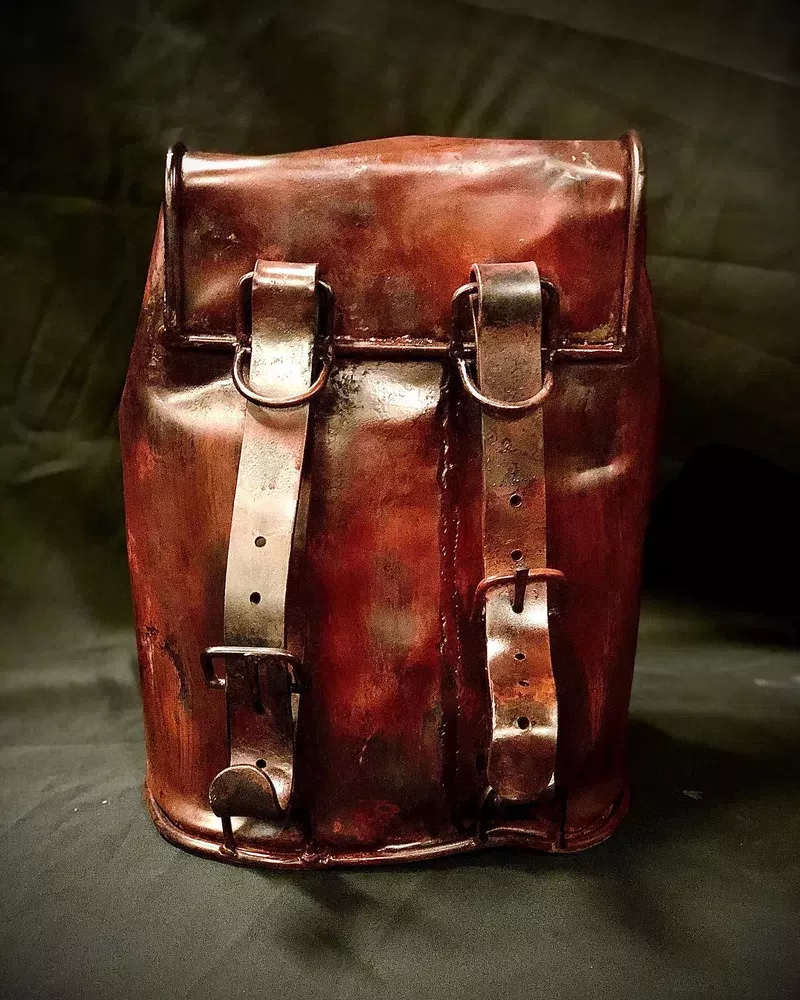
Wrought iron backpack made by Jose Castrillo

Forja José Castrillo. Palencia Mountain

To say Tormenta y Marea or to say Jose Castrillo is practically to say the same thing. With a very personal style that is difficult to define, as is often the case with any good artist, this craftsman of iron and other metals, designer of objects and furniture, offers works that are also unclassifiable but with great realism in many of the decorative objects he creates. An international artist, he is a master craftsman born in Guardo who has dedicated more than 20 years of experience and dedication to forging and working with metals. Jose Castrillo grants exclusivity to his works, with each one being a unique product. Jose Castrillo 979 86 64 08 His workshop is located in Tarilonte de la Peña in the Montaña Palentina.
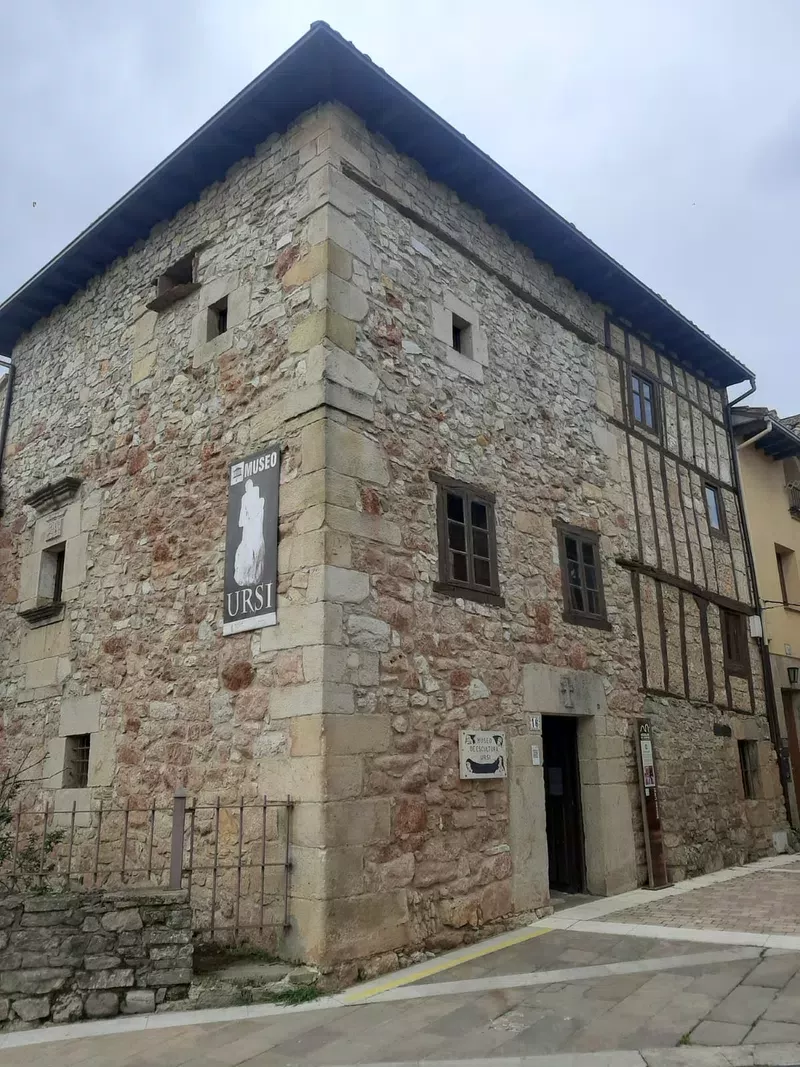
Facade of the Ursi Sculpture Museum

Ursi Museum

Tourist office of Aguilar de Campoo phone 979123641. Individual entry 2€. Groups of 10 to 15 people 1.5€ (Maximum group visit of 15 people). Ursicinio Martínez, URSI, has undoubtedly become one of the most renowned sculptors in Palencia. Born in 1932 in Villabellaco, he showed his artistic talents from a young age with wooden figurines and drawings. However, it wasn't until the 1980s that Ursi fully dedicated himself to sculpture. During this period, he created portraits of family and friends, a series of miners reflecting his time as a timberman in the 1950s in Barruelo de Santullán, and athletes; as well as some large-format sculptures. In the mid-1970s, he settled in Aguilar de Campoo, where he became a staunch defender of the rich and varied heritage of the town and the region, participating in the restoration tasks of the Monastery of Santa María la Real. More info
Stone cabin surrounded by a snowy forest in the Palentina Mountain, with two vehicles parked nearby.

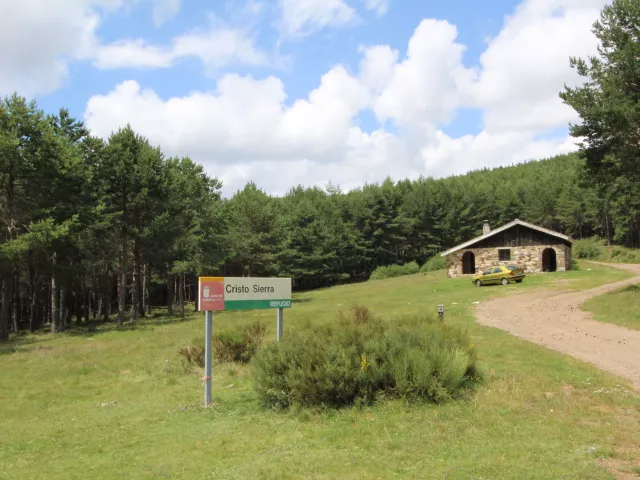
Cristo Sierra Refuge

The refuge can be accessed by car either from Villafría de la Peña, passing the Sanctuary of the Virgen del Brezo, or from Valcobero. The refuge features a fireplace and firewood in the surroundings, as well as a table and benches. It has 2 windows and the door has a latch. There is a small chapel attached to the refuge that could also be used for overnight stays if necessary. On the way down towards Valcobero, there is a water fountain.
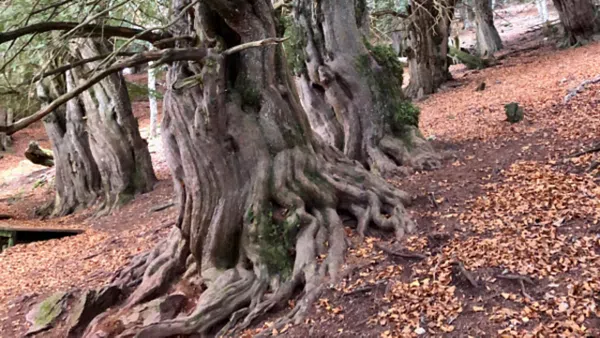
Path of the Tejeda de Tosande

Tejeda de Tosande, ancient trees.

Important concentration of Yew trees, mythological trees revered for generations. Due to their structure, they are one of the species from which no type of furniture can be made, because of the fibrous structure of their trunks. From its viewpoint, you can enjoy the most beautiful views of the Montaña Palentina. Access to this site is via a well-marked path that allows you to admire these ancient trees, which can reach 15 meters in height and 1.5 meters in diameter.
Starting point: Signposted parking on the CL-626 road, about 6 km from Cervera de Pisuerga towards Guardo.
Distance: Approximately 10.5 km (circular or "loop" route).
Elevation gain: About 400-450 meters of positive elevation gain.
Estimated duration: Between 3 and 4 hours, depending on pace and photo stops.
Difficulty: Moderate. Although suitable for those accustomed to hiking, the last 2 km before reaching the yew grove present a challenging ascent.
what to see and do in Cervera de Pisuerga,

Discover Cervera de Pisuerga: Gems of the Palencia Mountain Range

Cervera de Pisuerga, the vibrant heart of the Montaña Palentina, is nestled within the Montaña Palentina Natural Park. This charming village, declared a Historic Site in 1983, offers a journey back in time through its cobblestone streets and traditional architecture. Among its treasures are the majestic Church of Santa María del Castillo and the enigmatic rock-hewn hermitage of San Vicente, each telling stories of bygone eras.

Surrounded by an unparalleled natural setting, Cervera de Pisuerga is a perfect refuge for nature and tranquility lovers. Here, stone and wood intertwine with history, creating an open-air museum that invites exploration. Whether for a mountain getaway or to immerse oneself in its rich cultural heritage, this destination promises unforgettable experiences.

SEE ALL THE ATTRACTIONS OF CERVERA DE PISUERGA
Palencian Romanesque

Palencian Romanesque

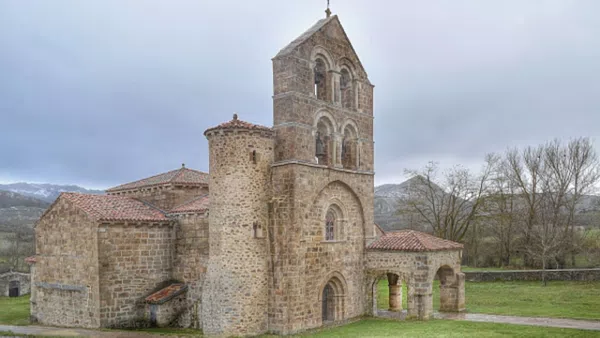
The original church of San Salvador de Cantamuda, belonging to an ancient monastery, was likely built at the end of the 12th century. The Collegiate Church of San Salvador is the heart of the village and one of the most photographed monuments of the Northern Romanesque. It was founded at the end of the 12th century by Countess Doña Elvira de Castañeda. The Bell Gable: It is its most distinctive feature. It is a three-story structure with windows for the bells, of almost perfect elegance and proportions. The Altar: Inside, it preserves a unique piece: an original Romanesque altar table, supported by small columns with beautifully carved capitals.

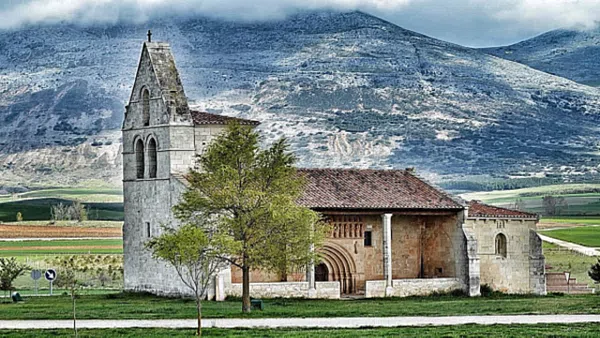
Style: It is a pure, sober, and robust Romanesque, built in ashlar stone that shines with golden tones at sunset. 2. Natural Environment: La Pernía. The village is located in the valley of La Pernía, within the Natural Park of the Palencia Mountain. It is surrounded by oak and beech forests. It is an ideal starting point for hiking routes to Pico Labra or to explore the source of the Pisuerga River at Fuente Cobre. The church stands out for the harmonious unity of the ensemble, without substantial transformations from its original purity. As with this example of Romanesque construction, we can find dozens in the Palencia Mountain. We speak of the Romanesque in San Salvador de Cantamuda, but we could see more in San Cebrián de Mudá, Villanueva de la Torre, Salinas de Pisuerga, Cillamayor, Villavega de Aguilar, Aguilar de Campoo, Pisón de Castrejón, Corvio, Matalbaniega, Revilla de Santullán, Salcedillo, and Brañosera, among other localities.

Historic church in a mountainous landscape of the Montaña Palentina, surrounded by green fields and cloudy skies.

WHAT TO DO AND SEE IN GUARDO

Guardo is a town located in the north of the province, serving as the gateway to the Route of the Reservoirs and also to the province of León. Once the mining hub of the area, today it primarily hosts the most important commercial activity in the region. As the area's main town, it offers great attractions for visitors. Guardo is a municipality located in the Montaña Palentina region, in the northwest of the province of Palencia (Castilla y León). It is the third most important population center in the province, after the capital and Aguilar de Campoo.

SEE ALL VISITABLE ATTRACTIONS IN GUARDO
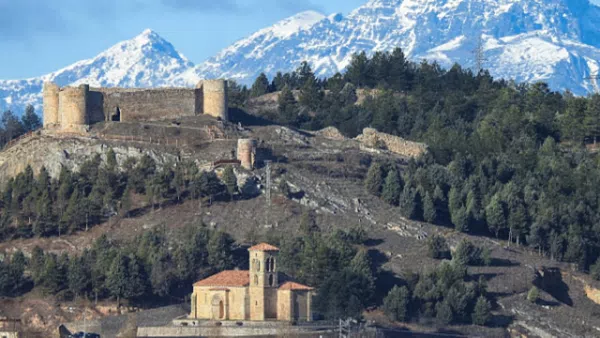
View of the castle and the church of Aguilar de Campoo with snow-capped mountains in the background, surrounded by forest.

WHAT TO DO AND SEE IN AGUILAR DE CAMPOO

Aguilar de Campoo is a town whose most striking feature is its usual scent of cookies. Additionally, with 7,200 inhabitants, it is one of the largest towns in Palencia. It also boasts significant examples of Romanesque art throughout the area, such as Santa Maria La Real, the artistic emblem of the city. Aguilar de Campoo, located in the north of the province of Palencia, is much more than the famous "Cookie Town." It is a strategic enclave of the Palencia Mountain, declared a Historic-Artistic Site, and stands out as one of the epicenters of Romanesque art in Europe.

SEE ALL ATTRACTIONS OF AGUILAR DE CAMPOO
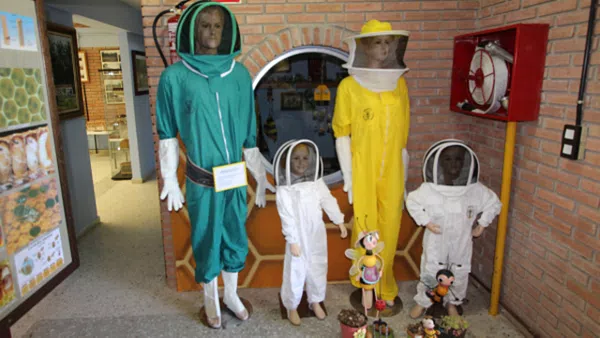
Museum of Bees Castrejón de la Peña,

Bee Museum

Castrejón de la Peña. If you are looking for any object related to bees, need an explanation, or want to see a model related to bees, the history of bees, their organization and work, and the different extraction systems, enter Museos Vivos, obtain a key and access the museum. The Bee Museum in Castrejón de la Peña (Palencia) is a unique space dedicated to the dissemination of beekeeping, located in the natural environment of the Montaña Palentina. It occupies the building of the old village schools and is an ideal visit for both families and specialists.
Holy Week procession in the Montaña Palentina with confreres dressed in purple carrying a float.

Palencia's Holy Week

In the Palencia Mountain region, we can witness the celebration of Holy Week in the northern town of Guardo. With a long-standing tradition like in many other places in Spain, the setting surrounded by mountains is particularly striking. It offers a different way to experience Holy Week in a high-altitude environment. Holy Week in the province of Palencia is one of the most sober and authentic celebrations in Spain. Its main event, the Holy Week in the capital, has been declared a Festival of International Tourist Interest since 2012, but the rest of the province hides medieval gems and rural traditions that are well worth discovering.
  • Experience nature

    The Montaña Palentina is an untamed sanctuary where the limestone relief sketches a horizon of majestic peaks and deep valleys. In this corner of northern Palencia, beech and oak forests intertwine, creating a vital refuge for emblematic species such as the brown bear and the capercaillie. Water is the undisputed protagonist, springing from crystal-clear sources that feed reservoirs surrounded by lush and ever-changing vegetation. Walking along its trails allows one to discover the verticality of Pico Curavacas or the elegance of Espigüete, stone giants that watch over the surroundings. The pure air and the silence broken only by the wind make this natural park a paradise for hiking and contemplation. Each season paints the landscape with unique hues, from the intense green of summer to the autumnal golds that bathe the slopes. It is, without a doubt, an ecosystem where geology and biodiversity coexist in an almost mystical balance. The richness of its flora and fauna positions this region as an essential jewel of Spain's natural heritage. Exploring its routes is to connect with a wild nature that still retains its purest and most authentic essence.