
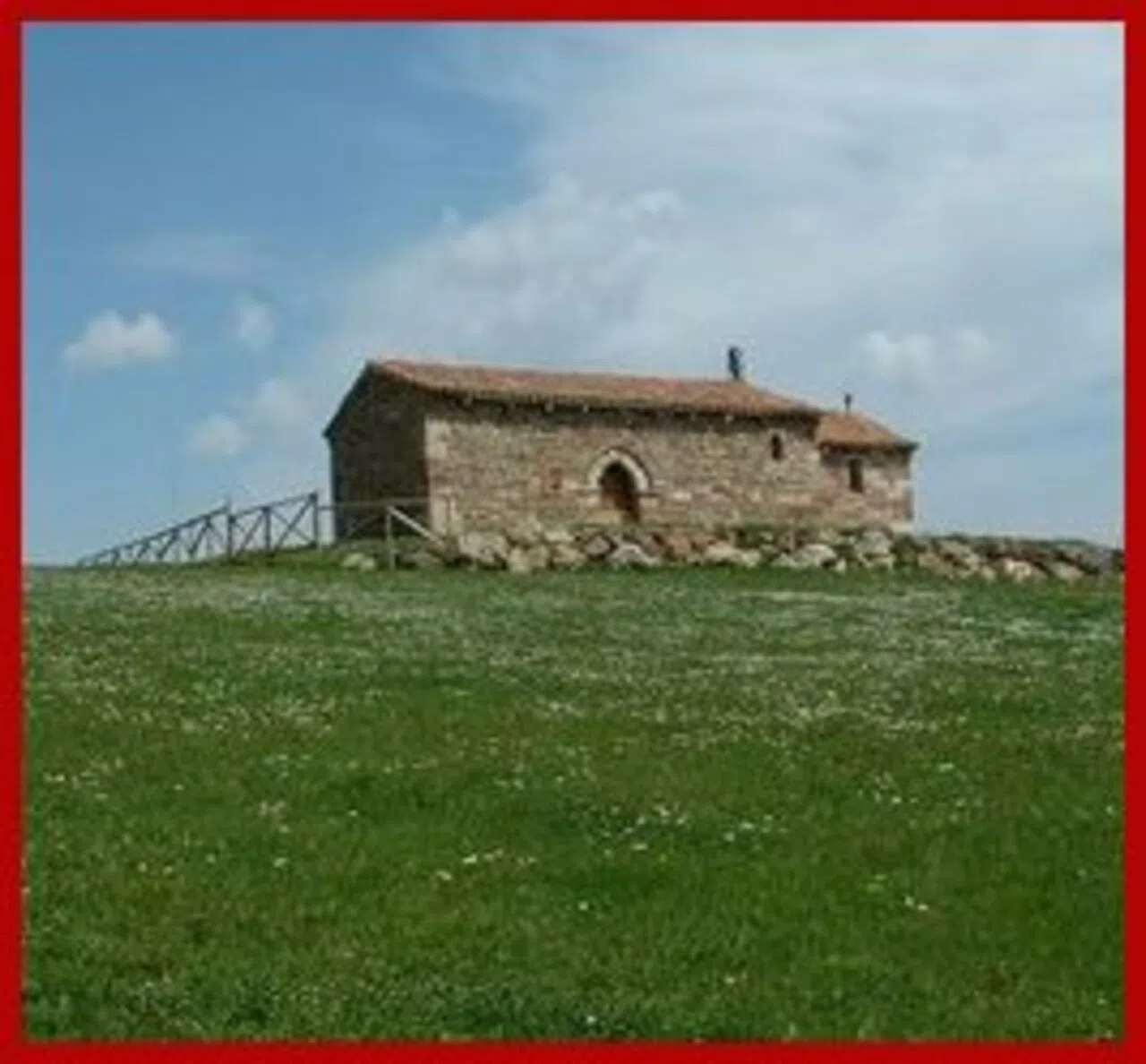
Oteruelo Hermitage
A gem in Mudá
Built with ashlar and masonry, it is named Oteruelo or Otero due to its location and boasts a beautiful natural environment. Dating back to the early 13th century, it features all the characteristics of Romanesque architecture except for the size of the nave, which is taller than the apse, an unusual trait. Its floor plan is rectangular, with a restored flat wooden roof. It has a single window as a light source on its south wall with a double splay and a semicircular arch. Through a pointed and doubled triumphal arch that rests on imposts and nacelle imposts and on two attached heptagonal columns with capitals of protomes at the angles of the baskets, one accesses the ashlar apse, covered with a pointed vault and only decorated by a line of nacelle impost.
In the chancel, there is a slightly pointed window with an inward splay, now blocked; another on the south wall with a double splay, inward and outward, respectively with a semicircular and rectangular arch. On the Epistle wall of the nave, there is a doorway formed by a pointed arch with large voussoirs, a smooth protective chambranle, and imposts with equally simple decoration, on ashlar jambs. It is attributed, like the nave, to the 14th century.
On the eaves of both architectural pieces, nave and chapel, there is a simple cornice with equally simple corbels of the ship's prow type. Declared a Cultural Interest Asset on 07/15/1993. It is located at a distance from the town of Mudá.